You’re great in some rooms and drained in others. Colleagues praise your “calm under pressure,” yet a simple misread Slack spirals into a conflict you didn’t see coming. You’re not broken—you’re just flying without the right instruments.

Here’s the promise: in the next 30–60 minutes, you’ll learn exactly which tools and resources cut through the noise to help you identify personal strengths and weaknesses—and what to do with that insight immediately in the current year.
Ready to see your profile come to life? Discover your pattern in minutes → Get my Free Snapshot
Why “tools over willpower” wins today when you need to identify personal strengths and weaknesses
Reflection matters. But relying on memory and mood makes self‑assessment inconsistent. The right stack of tools turns fuzzy hunches into clear signals you can act on—fast.
- AI driven personality analysis removes guesswork and bias by translating your responses into behavioral patterns.
- Structured prompts and checklists force apples-to-apples comparisons across days, projects, and people.
- Lightweight experiments (scripts, role-plays, timers) validate your hunches in real conversations.
Bottom line: modern, online personality test AI tools make it easier than ever to spot patterns, correct blind spots, and improve communication with DISC-based language.
Start with the engine: AI DISC assessment resources that give clean signal
If you want leverage, begin with a pro‑grade AI DISC assessment. It maps how you tend to drive decisions (D), connect (I), pace (S), and apply precision (C). Then it recommends tactics matched to your pattern.
Here’s a curated shortlist to anchor your stack:
- TraitMatch AI (core). An AI DISC assessment built for speed and action. You answer targeted prompts, and the model synthesizes your likely profile with practical plays for meetings, messages, and negotiations.
- A “second opinion.” If you like triangulation, use an AI personality test free option as a quick comparison. Cross‑checking language across two tools reveals what’s core vs. situational.
- A lightweight journal bot. After you get your snapshot, capture one win and one wobble per day for 7 days. You’ll surface repeat contexts where your strengths shine—and where weaknesses hijack you.
Pro tip: If you want to compare tools side-by-side, use our definitive directory of options for the current year in this AI personality test free guide.

The 30-minute stack to turn insight into action today
Want a quick, repeatable routine you can run this week? Use this time‑boxed workflow to identify personal strengths and weaknesses and pressure‑test them live.
Step 1 (8–10 min): Run your AI DISC
- Complete TraitMatch AI to get your initial pattern and communication do’s/don’ts.
- Screenshot key lines you want to test (e.g., “prefers concise agendas,” “loses patience with ambiguity,” “builds trust through listening”).
Step 2 (5–7 min): Tag one real conversation you’ll have today
- Pick a meeting or message where stakes are medium (not trivial, not career-defining).
- Note the other person’s likely DISC cues (fast/slow? people/task? details/big-picture?).
Step 3 (7–8 min): Prep a micro‑play
- Draft a 3‑sentence opener customized to their cues.
- Write one sentence you’ll use if tension rises.
- Choose one behavior to stress‑test (e.g., ask a clarifying question before defending your idea).
Step 4 (8–10 min): Run + reflect with your journal bot
- Immediately after the interaction, record: What worked? What felt hard? What surprised you?
- Translate observations into pattern language: strength (repeat), weakness (mitigate), or context-dependent (watch).
If you want a frictionless starting point, just Get my Free Snapshot and use the built‑in quick wins to run Step 3 within minutes.
Quick self‑check — which of these feel like you this week?
- I over‑explain when I’m unsure, then regret not asking one clarifying question first.
- I avoid pushing back in meetings, then ruminate for hours.
- I get impatient with slow decisions and accidentally steamroll.
- I write long messages to “be clear,” but people still miss the point.
- I struggle to switch tone for different audiences.
Soft nudge: if two or more hit home, it’s time to map your default pattern. You can Get my Free Snapshot now and validate the top two behaviors in your next conversation.
What each resource reveals (and what it misses)
Different tools see different parts of you. Pair them to reduce blind spots.
AI DISC assessment (TraitMatch AI)
- Reveals: core preferences under time pressure, communication tone, collaboration style, stress tells.
- Misses: unusual contexts (jet-lag, illness, one-off high stakes) that can temporarily flip your pattern.
Secondary AI personality test free option
- Reveals: consistent language across tools, reinforcing your likely profile.
- Misses: depth. Free tools may offer fewer scenario-based tactics.
Journal bot or templated notes
- Reveals: triggers and repeat contexts (certain stakeholders, ambiguity levels, time of day).
- Misses: baseline predisposition without the AI model’s synthesis.
360‑lite form (peers/managers)
- Reveals: how your style lands on others; what people count on you for; friction themes.
- Misses: day-to-day nuance if raters only see you in a narrow slice of work.
Voice or writing analyzer
- Reveals: tone drift, clarity, hedging, and verbosity in real messages.
- Misses: intent and context unless paired with your DISC lens.
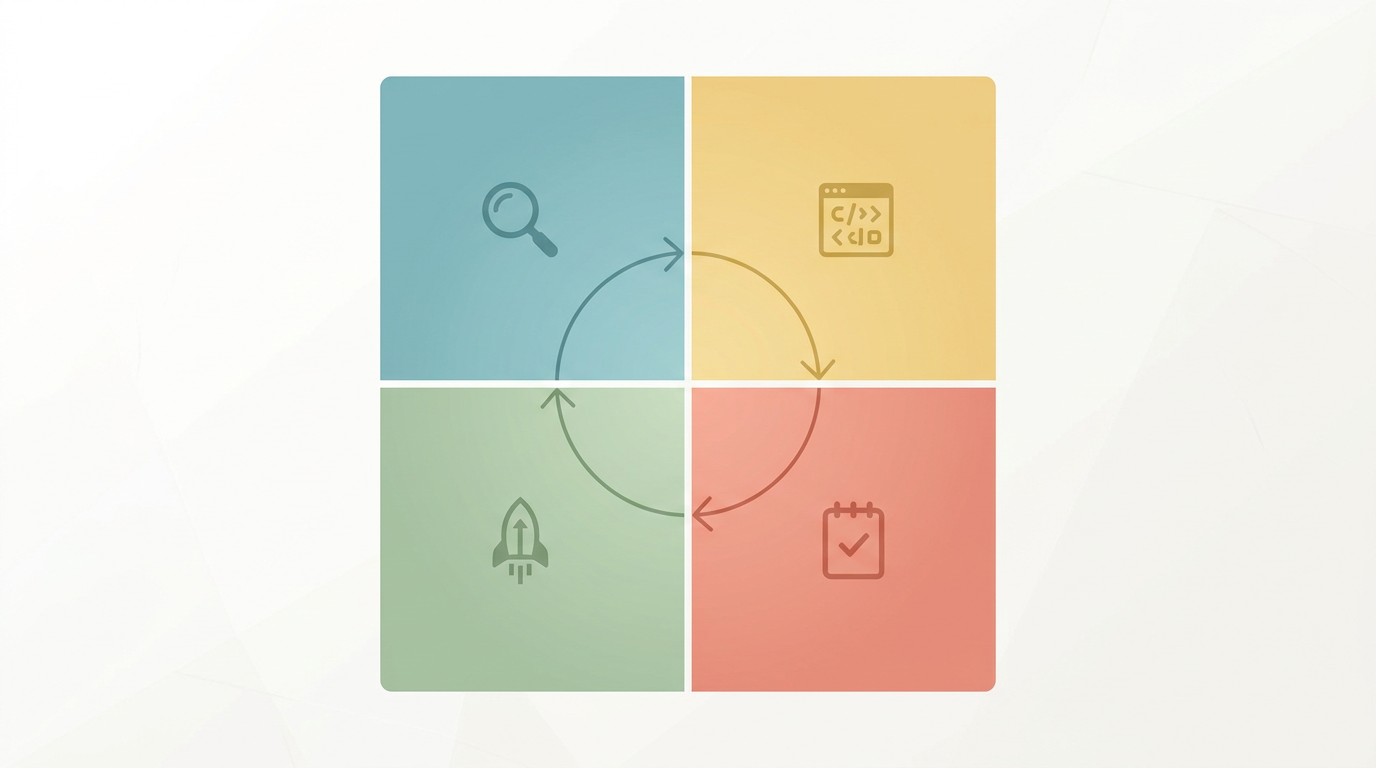
The D‑I‑S‑C micro‑framework to diagnose, decode, deploy
Use this simple loop to operationalize your tools:
- Diagnose (AI): run an AI DISC to set your starting hypothesis.
- Decode (Notes): log one interaction/day mapping what helped or hindered.
- Deploy (Plays): pick a single behavior to test next time (e.g., “ask for agenda,” “summarize in one sentence,” “invite dissent once”).
- Debrief (Adjust): tag it strength, weakness, or context-dependent and plan your next play.
This loop is fast, forgiving, and compounding. In a week, you’ll know more about your default strengths than most people learn in a year. If you want ready‑made plays, here are practical understand my communication style use cases to plug in today.
DISC traces back to William Moulton Marston’s work in 1928 and has been used across Fortune 500 companies, coaching programs, and leadership curricula for decades. Modern AI implementations don’t replace the framework—they translate it faster and personalize it with scenario‑based guidance. That’s why an AI DISC assessment remains a trusted starting point for career development and relationship insight in the current environment.
Career development with DISC: pick roles, projects, and managers wisely
Your strengths compound when the environment fits your pattern. Use your tools to choose better bets.
- Project selection: If your D is high, bias toward outcome‑driven, time‑bound missions. If your C is high, seek work that rewards precision (compliance, analytics, QA).
- Manager fit: Map your manager’s likely profile and write a “user manual” for how you work best. Offer a one‑pager; ask for theirs.
- Interview prep: Draft 3 stories that show your strengths under stress. Use your AI snapshot to avoid generic claims and highlight specific behaviors.
- Promotion plan: Match your pattern to gaps on your team—then volunteer for work that lets you stretch without snapping.
Pro tip: Most friction isn’t about competence; it’s about mismatched styles. A shared DISC language reduces escalation and speeds decisions.
Free vs. premium: how to spend smart (and when not to)
You can go far on free. Here’s a sensible path:
- Start free: Run an initial online personality test AI, journal 7 days, and ask two peers for one thing you do well and one thing to adjust.
- Upgrade with intent: Pay when you need deeper scenario libraries, role‑specific plays, or manager‑specific tactics.
- Avoid shiny objects: Skip tools that diagnose without giving concrete plays you can test this week.
Power users: when you’re ready to squeeze more value from a free result, this TraitMatch AI free report preview guide shows advanced tactics to turn a snapshot into measurable wins.
Measuring progress: dashboards and weekly check‑ins
Strengths grow when you observe them. Weaknesses shrink when you design around them.
- Set a weekly 20‑minute review: What became easier? What still hijacks you?
- Track two metrics for 4 weeks: meeting clarity (1–5) and recovery time after friction (minutes/hours/days).
- Build a tiny dashboard: strengths used (count), instances of overuse (count), and one design tweak for next week.
- Celebrate evidence: paste one message or note that shows a real‑world win. Confidence compounds.
If you’re mid‑journey and want a clean baseline, you can always jump back in and Get my Free Snapshot. It takes minutes and gives you new plays to test next week.
Templates: ready‑to‑use plays for common moments
Copy, paste, personalize to your DISC pattern:
- 1:1 opener with a detail‑oriented peer (high C): “I’ve sketched the steps, assumptions, and risks. Can you sanity‑check the logic before we debate scope?”
- Team update when people are busy (high D): “Result first: We can ship Friday if we drop scope B. Impact: X users unblocked. Decision needed: choose B or Friday.”
- Brainstorm with a social connector (high I): “Let’s dump ideas for 5 minutes, then cluster. I’ll capture and propose next steps so we don’t lose the energy.”
- Sensitive feedback with a steady teammate (high S): “I value our rhythm. There’s one tweak that would help me: could we confirm handoffs in writing so nothing falls through?”
As you test these, tag what worked as strength to repeat and what strained you as a weakness to design around.
Your next right move
You don’t need a personality “makeover.” You need a clear map and a few high‑leverage plays. The curated tools above help you identify personal strengths and weaknesses quickly—and turn that knowledge into better conversations, projects, and decisions looking ahead.
Start with momentum, not overwhelm. It takes minutes to get a professional‑grade baseline you can use today: Get my Free Snapshot — see your pattern, get your plays, and communicate with confidence.


